
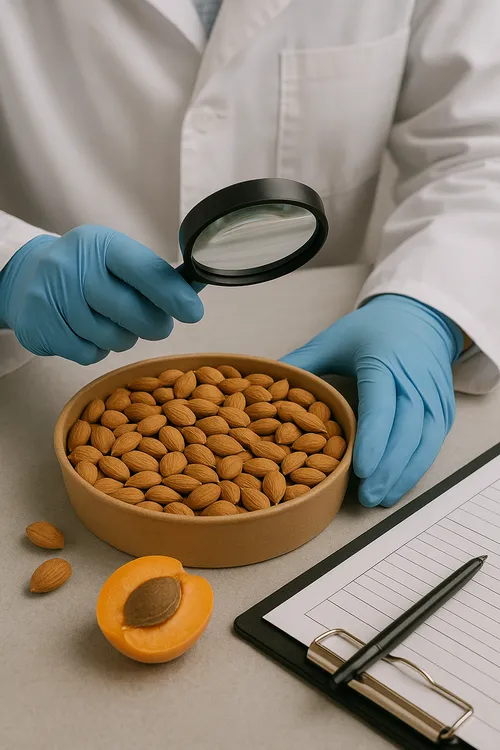
Sweet vs bitter kernels: the most critical distinction
The first and most important safety step is verifying that supplied kernels are sweet edible apricot kernels rather than bitter varieties. Bitter kernels contain naturally occurring amygdalin and are not suitable for food applications.
- Sweet kernels have a lighter, almond-like taste
- Bitter kernels release a noticeably stronger aroma
- Laboratory analysis can confirm safe amygdalin levels
Reputable exporters provide written guarantees and maintain strict segregation during processing.
Documentation buyers typically request
To ensure compliance, importers usually request a comprehensive document set that includes:
- Product specification sheet with moisture, size and defect limits
- Microbiological analysis for each lot
- Aflatoxin report — required for all nut-related items
- Pesticide residue analysis where applicable
- Origin certificates and crop year information
- Organic certification (if relevant)
Clear documentation not only supports compliance but also strengthens the buyer’s position when comparing offers.
Visual and physical quality evaluation
Apricot kernels should be uniform, clean and free from foreign matter. Key checks include:
- Colour uniformity — no dark or oxidised kernels
- Moisture level — typically max. 6% for safe storage
- Absence of shell fragments
- Minimal broken kernels to ensure stable oil yield or confectionery use
High-quality kernels show a smooth surface and intact almond-like shape.
Storage, packaging and shelf-life notes
Apricot kernels should be stored in cool, dry conditions and packed in breathable or lined bags depending on moisture level and intended application. Bulk buyers commonly use:
- 12.5 kg vacuum bags
- 25 kg multilayer kraft bags
- Big bags for industrial extraction projects
Selecting the right supplier
Importers typically evaluate suppliers on three main pillars:
- Traceability and documentation readiness
- Ability to supply consistent lots over the season
- Clean processing environments and modern sorting equipment
Turkish sweet apricot kernels remain a reliable choice due to stable availability and well-established processing facilities.
Summary
Safety and compliance are central to sourcing apricot kernels. By distinguishing sweet from bitter varieties, requesting full documentation, evaluating physical quality and selecting a capable supplier, buyers can create stable long-term programs that meet both food and cosmetic industry requirements.