
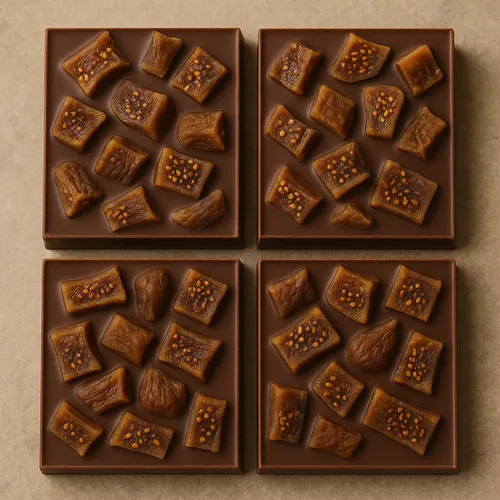
Why confectionery producers choose dried figs
Dried figs offer a set of natural advantages that complement chocolate’s flavour and texture. Producers value:
- Natural sweetness that supports clean-label positioning.
- Soft, chewy texture that contrasts beautifully with chocolate.
- Golden-brown fruit visuals for inclusions and cross-sections.
- Cost efficiency compared with many berries and exotic fruits.
- Stable performance across seasonal production runs.
These attributes make figs ideal for premium ranges where differentiation and natural ingredients matter.
Best fig formats for chocolate and confectionery
1. Fig dice (6–8 mm, 8–12 mm, 12–16 mm)
The most common option for inclusions. Dice provide:
- uniform distribution throughout chocolate mass
- excellent bite consistency
- a clean visual cross-section when bars are broken
Many brands prefer oil-dusted diced figs to improve flow and reduce clumping on production lines.
2. Fig strips and chopped figs
Often used in pralines, clusters and chocolate bites. These formats give a more natural, artisan look — especially for hand-crafted or premium small-batch items.
3. Fig paste for fillings and centres
Fig paste is widely used in:
- filled chocolate bars
- fruit centres and layered pralines
- soft confectionery and plant-based fillings
Paste provides smooth sweetness and pairs well with cocoa, nuts and spices.
Moisture management in chocolate applications
Moisture consistency is essential. If figs are too moist, they may cause:
- agglomeration during mixing
- undesired stickiness
- shorter shelf life
Most confectionery buyers specify:
- 18–22% moisture for dice
- fine oil-dusting to reduce stickiness
- tight size tolerances for premium quality control
Pairing figs with complementary chocolate inclusions
Bulk buyers frequently combine figs with:
- Hazelnuts — iconic pairing for spreads, pralines and bars.
- Pistachios — visual contrast and premium perception.
- Raisins & mulberries — for mixed fruit chocolates.
- Spices such as cinnamon or cardamom for seasonal editions.
Variations in cube size, roast, and mix ratios can help brands create signature flavour profiles.
Quality factors buyers should check
Industry buyers commonly request:
- Exact cut-size tolerance for dice (±2 mm)
- Low seed count for smoother mouthfeel
- Uniform colour for visual appeal
- Microbiological stability aligned with chocolate production
- Bulk packaging suited for automated dosing
These specifications ensure consistent results across multiple batches and seasonal supply changes.
Summary
Dried figs bring natural sweetness, visual texture and clean-label appeal to modern confectionery projects. With the right format, moisture level and specifications, figs work exceptionally well in bars, pralines, coated snacks and filled products.
Our team supports chocolate producers of all sizes — from boutique chocolatiers to global brands — with reliable, specification-driven bulk fig solutions.